
CMM Conversations
Practitioner perspectives
Dilip Amarlal on Founder Trust and Succession
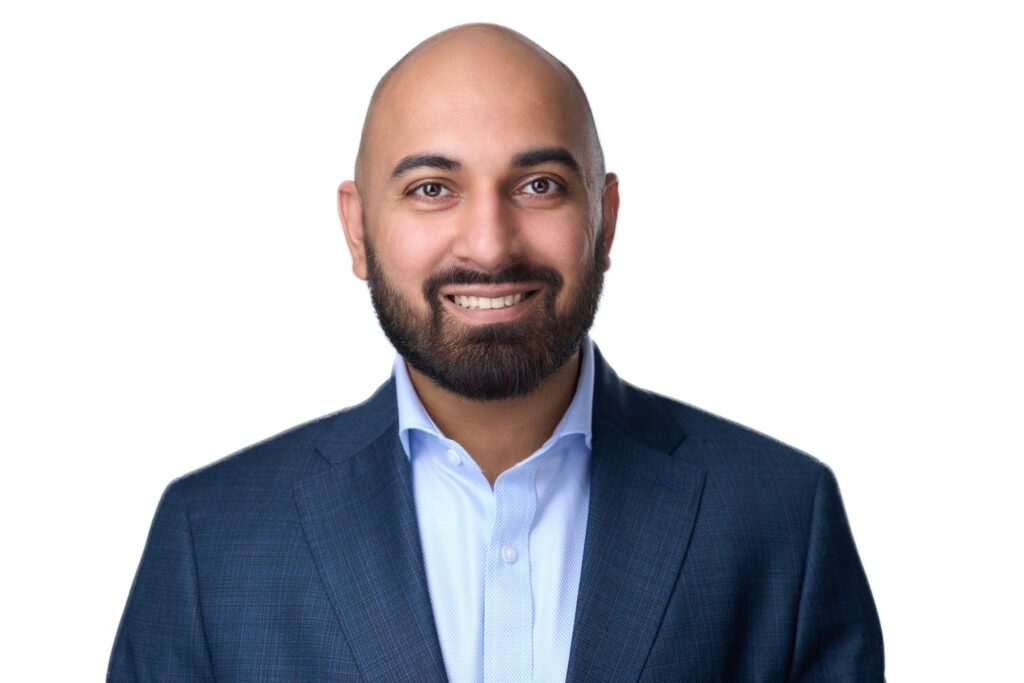
Operating Partner at Salt Creek Capital and CEO of MK Plastics, Salt Creek Capital / MK Plastics
Salt Creek Capital Operating Partner and MK Plastics President & CEO Dilip Amarlal discusses patient dealmaking, practical succession planning and protecting the knowledge that makes founder-built manufacturers valuable.
A credible succession plan starts before closing: earn the founder’s trust, establish clear leadership roles and preserve the people and knowledge that make the business valuable.
Salt Creek Capital has completed two Canadian acquisitions in under a year. What is drawing U.S. PE firms to Canada's lower middle market, and what opportunities might Canadian buyers be overlooking?
At Salt Creek Capital, we're active value investors. We're not a fund, and so we don't have the pressures of deploying and recycling the raised capital on relatively short timeframes. We bring long term committed capital that we deploy on a deal basis and only when there is a clear strategic fit, and when we have more to offer than simply writing a check. In other words, we look for the needle in the haystack rather than buying the whole haystack, and Canada's lower middle market is full of needles: founder-built manufacturers with decades of brand equity in niche markets and no family successor. As this silver tsunami of retiring owners builds, there's a real shortage of proven, experienced buyers who can offer 100% certainty of closing. For a founder, that certainty with a trustworthy partner often matters as much as the price. I've lived in Montreal, QC, for over a decade, but even for Salt Creek, Canada feels like a neighbor’s house: the layout is familiar, but the house rules are slightly different. We respect the complexity of investing across the border, and our Canadian deals in the past few years have only given us more confidence to keep investing in the North.
What Canadian buyers often overlook is the gap in the market. Many remarkable companies are too small for the large Canadian funds and too complex for individual buyers, so they go unnoticed. Buyers also underestimate the seller's role. Spotting key-person risk is easy. Seeing decades of institutional and industry knowledge is harder. The best transitions are flexible, and that's what we've learned to master over the last 15 years at Salt Creek. Sometimes an experienced executive steps in as CEO. Sometimes a trusted and proven insider steps up as the CEO, as Jacques LeBlanc, Nanoptix's CFO of about 20 years, did when we backed the retained management team. Sometimes the seller hands over the keys. And sometimes, as at MK Plastics, the seller stays on as a partner, unburdened, having fun, and focused on creating value instead of managing the day-to-day pressures of administration and growth.
You first visited MK Plastics about two years before the acquisition. What did you do during that period to earn the founding family's trust?
There's no formula for trust. You have to demonstrate it, and you have to earn it.
The MK Plastics deal took two years. Our first visits were simply about immersing ourselves in the business. From our very first walk on the shop floor, we knew it was a special place, and we wanted to understand what made it special. I'd bet that nine times out of ten, founders want to preserve exactly that.
Around that time, MK was relocating to a new industrial hub. Manufacturing paused, infrastructure moved into the new facility, assembly lines had to reach readiness, and there was a recovery period. A move like that would test any company, and the family rightly focused on running the business rather than on the transaction. We chose patience. We showed respect for the family and confidence in the business's foundations and in the management team keeping the wheels on. It's easy and tempting to outbid the competition. It's much harder to hang around the hoop and stay disciplined. We also had a highly experienced deal team and partners who continue to guide us (shout-out to Gary Kurnov, Dan Mytels, Dan Phelps, Dan Price, Tyler Romrell, and Daniel Alameh).
None of this replaces thorough due diligence. You still need a strategic fit and a clear intent, a value creation plan, an answer to "why you and why now," and, of course, buyout models with base, bear, and bull cases. But past the IOI stage, other serious buyers will have put in the calories too. When everyone has done the legwork, how do you set yourself apart as the right buyer?
At MK Plastics, you partnered with Salt Creek and stepped in as CEO. How did having the future leader involved before closing shape the founding family's confidence in the succession plan?
The sellers' trust allowed me to step into the business as a consultant. It also showed that the family wasn't handing the business to a fund they had met through a data room. They were partnering with someone who had walked the floor, worked through a difficult stretch with them, and spent time with the team on operations while they focused on the demands of the transaction. By the time we closed, the succession plan wasn't a promise on paper. They had already watched it working. And when I stood up at our Day 1 town hall on October 8, I could speak to employees about their business specifically, not in generalities. For our people, closing day felt like a continuation, not a disruption.
The same was true at Nanoptix. It came down to trust in Jacques LeBlanc, and to backing his vision and the experience and knowledge he had built over years in the company's leadership.
When a founding family wants to remain involved after selling, how do you balance keeping them meaningfully engaged with your responsibility as CEO for running the business day to day?
The work starts well before closing. You need a common, shared vision, and both sides have to be comfortable staying in their own swim lanes: who drives what, when you tag-team, and when you lean on each other. In both of our deals, we were aligned on structure, autonomy, and the company's direction and value-creation drivers long before closing day.
A few principles keep it working for me:
1. Honour the past and own the future: we talk openly about what built the company and what has to change for its next chapter.
2. Disagree in private and align in public: we have healthy debates and let the best ideas win. The organization sees one leadership team.
3. Keep a regular cadence: frequent one-on-ones keep small concerns from becoming big issues.
It works because we want the same thing: a stronger Nanoptix for the next 30 years and a stronger MK Plastics for the next 60.
When stepping in as CEO after an acquisition, what should be the biggest priorities in the first 90 days, and how do you balance learning the business with making changes?
The first 90 days are all about earning the right to lead. I spend very little time in my own office and much more on the floor, in conference rooms and with our customers, listening.
My priorities as I form a working hypothesis:
1. Engage every stakeholder: frontline employees, the company's historians, customers and vendors. I ask questions to understand clearly what should never change and what to fix first.
2. Protect and stabilize: safety, quality, delivery, cash and customer commitments. I evaluate how well we are executing on these promises.
3. Quick wins before direction: deliver a few visible wins that employees have wanted for years. At the end of the 90 days, I communicate my working hypothesis and only then do I create a strategic plan or initiate a transformation effort with the team.
In family-built manufacturing businesses, decades of knowledge often sit with long-time employees rather than formal systems. When ownership changes, how do you ensure that shop-floor knowledge stays in place, and where is it most at risk of being lost?
Shop-floor knowledge is most at risk during the anxious stretch right after closing, when experienced people wonder whether they still matter and quietly mark themselves "open to work." It's also at risk in the unglamorous handoffs: custom quoting, legacy engineering and selection tools that require tribal knowledge and judgment, supplier relationships without MSAs, and the informal fixes that keep the lines running. One way to protect it is to start with people, not documentation. People share knowledge when they feel respected and hold onto it when they feel replaceable.
What do Canadian founders tend to underestimate when selling to a U.S. buyer, and what do U.S. PE firms underestimate when acquiring a Canadian business for the first time?
Canadian founders underestimate how deep diligence goes once a deal is in exclusivity. Our DD request lists ran to nearly 200 line items. We flag the top 20 to 30 and let the rest come in over time, but the depth still surprises sellers. They also underestimate what comes after closing: professionalization before scale, meaning board governance, timely reporting, formal operating reviews, and disciplined capital allocation (the hallmarks of any well-managed PE firm in the U.S. or Canada).
U.S. PE firms underestimate, or are simply unfamiliar with, tax status and mechanics in the legal stage (such as SR&ED tax credits for a CCPC), as well as provincial differences. Québec also has its own language, employment, workplace conduct, and safety rules. A Canadian operating partner or experienced PE firm that understands these nuances can help a deal get done for all parties.
About Dilip Amarlal
Dilip Amarlal is President & CEO of MK Plastics, a Montreal-based manufacturer of FRP-based HVAC solutions for mission-critical applications, and a Salt Creek Capital portfolio company. He brings more than 16 years of leadership in industrial manufacturing, at family-owned, private equity–backed, and privately held global conglomerates across Canada, U.S., and Asia. Dilip currently serves as Operating Partner at Salt Creek Capital and sits on the Board of Nanoptix. He holds a bachelor's degree in mechanical engineering and an MBA from the University of Illinois Urbana-Champaign.